Short Phonics Stories
Finally our phonics short stories section is complete with 21 stories to help your child really learn to read. These stories are phonics based which means they focus on specific sounds but also offer a great opportunity to learn words by sight. Here is one great idea for using this section. Choose a story, based on a sound you want to practice. Then turn off the audio and let your child watch. Ask the child simple questions for example:
1- Who are in the story? 2- Which sounds do you often hear? 3- Can you tell the story in your own words? Next, turn on the audio and let the child hear it being read. Finally turn off audio again and then pause when words show up. Ask the child to attempt to read the sentences. Can he/she do it? Yeah! Go out and celebrate - your child is reading.
Mouse Cow /au/
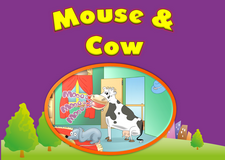 Diphthongs ‘ou’ and ‘ow’ making the sound /au/ will be learned in this funny story. A mouse learns to deal with a noisy cow.
Fox, Dog, Log - Short 'O'
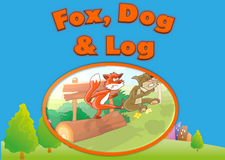 Short ‘O’ phonics story – og, ox, word families. See the short ‘O’ in action in this story. Also a great way to learn sight words. A fox and a dog battle it over who sits on a log.
Bunny & Bug - Short 'U'
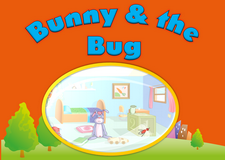 Short ‘U’ story – ug, uzz, uff word families. See the short ‘u’ in action in this story. Also a great way to learn sight words. A bug bugs Bunny.
Mike Rides Bike - Long 'i'
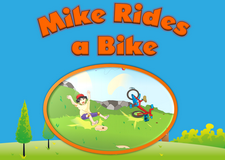 Long ‘i’ word families – ike, ide, ite, igh and ‘y’ as long ‘i’ will be learned. Mike learns to ride a bike properly.
Rat Attack -Short 'a'
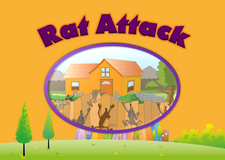 Short ‘a’ phonics story – at, atch, ap, ack, word families. See the short ‘a’ in action. Also a great way to learn sight words. An army of rats go head-to-head with a mouse.
Ben, Pets, Vet - Short 'e'
 Short ‘e’ Phonics story – et, en, ell, elp, word families. See the short ‘e’ in action in the story. Also a great way to learn sight words. Ben learns what it takes to keep his pets healthy.
Tim, Kitten, Fish - Short 'i'
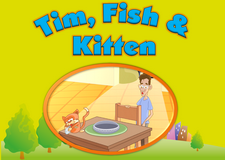 Short ‘i’ Phonics story – ish, im, word families. Also a great way to learn sight words. Tim’s kitten eats his fish.
Sing King! Sing! - ng digraph
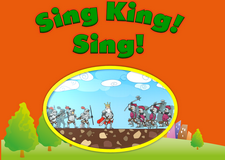 Endings digraph ‘ing, ong’, ending blends ‘nd’ and more sight words will be learned in this story. A king saves his kingdom with a song.
Stacy & Star - S Blends
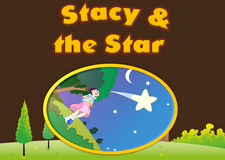 Consonant blends ‘st, sk, sl’ and a few other consonant blends. Also great for practicing sight words. Stacy rides in a star.
Chickens & Fox - 'ch' digraph
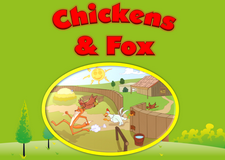 Consonant digraph ‘ch’ and sight words are practiced in this story. A fox is taught a lesson when he tries to steal eggs.
Shane the sheep - 'sh' digraph
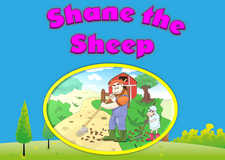 Consonant digraph ‘sh’ and sight words are learned in this story. Shane the sheep learns to put on his shoes.
Kate & Snake - Long 'a'
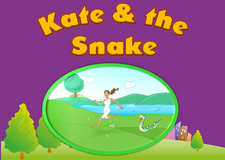 Long ‘a’ and word families, vowel digraphs – ain, ay, ake, ate, ase, ape and sight words to learn. Kate is chased by a snake.
Pete, Peach, Bees - Long 'e'
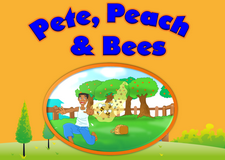 Long ‘e’, vowel digraphs and word families are learned – ee, ea, ete. Pete comes up with a new way of dealing with menacing bees.
Joe & Goat - Long 'o'
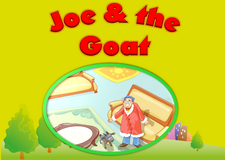 Long ‘o’ vowel digraphs and word families – oat, oe, ow, ome. Joe shares his coat with his goat.
Cute Mule - Long 'u'
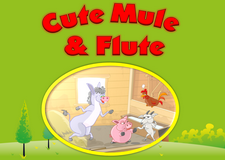 Long ‘u’ with the letter ‘u’ and silent 'e' – ute, ule, une, ude. Jude the flute player fans a fan in a mule.
Good Cook - Short 'oo'
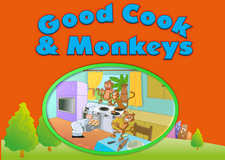 Short ‘oo’ story. Practice the short sound of ‘oo’ and sight words. A good cook is tormented by three mischievous monkeys.
Birds, Girls- R Controlled
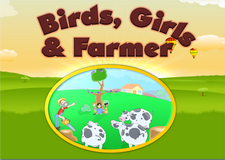 R-Controlled Vowel Phonics story – ir, ur, er, r-controlled vowels. Learn r-controlled vowels in this short phonics story. You will also learn sight words. In this story, three girls and a herd of cows prevent a farmers from cutting a third tree. Words to keep an eye out for are – girls, birds, chirp, herd, third, first, burn, farmer.
Boots, Roof - Long 'oo'
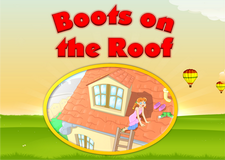 Long OO vowel digraph phonics story – oo, oo . Learn the long oo vowel digraph this short phonics story. You will also learn sight words. In this story, Loona’s dog, Boo, plays a trick on her. Words to keep an eye out for are – Loona, Boo, roof, and boots. Also notice the use of a single short OO digraph in the story in the word – look.
Boy, Toy, Oil - Diphthongs
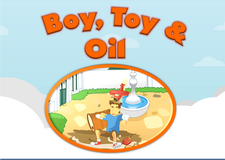 Double Vowel Diphthongs Phonics story – oi, oy diphthongs. Learn oi, oy vowel double vowels in this short phonics story. You will also learn sight words. In this story, a boy falls on slippery and learns to be more cautious when playing with his toy. Words to keep an eye out for are – toy, boy, enjoy, oil, joy.
Man Cat & Rat - Short 'a'
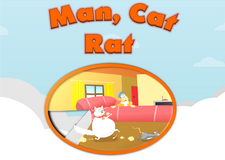 Short ‘a’ and word families phonics story – at, an, ast, atch, ap & grab . Learn a couple of short ‘a’ word families in this funny story. You will also learn sight words. In this story, a fat cat is not match for a fast rat. Words to keep an eye out for are – cat, man, rat, fast, catch, nap, grab.
Rain Rain Away - Long 'a'
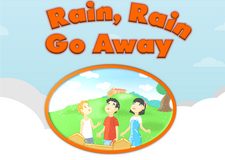 You will learn long ‘a’ vowel digraphs in this phonics story and long ‘a’ silent ‘e’ – ai, ay, ame. Learn the long ‘a’ vowel digraph in this short phonics story. You will also learn sight words. In this story, the rain stops the children from playing outdoors.
Introduction to Phonics Stories
Welcome to your dedicated space for mastering Phonics Stories. In early childhood education, establishing a strong foundation in phonics is the key to unlocking literacy. Whether you are a teacher planning a comprehensive curriculum or a parent helping your child read their first words, our resources are designed to make learning effective and enjoyable.
This guide focuses on short vowel i stories and associated phonemic concepts. We understand that learning to read is a journey that involves recognizing sounds, decoding words, and understanding meaning. Our materials—ranging from printable worksheets to interactive games—bridge the gap between theory and practice, ensuring students grasp the nuances of English pronunciation and spelling.
The Importance of Systematic Phonics Instruction
Why focus on Phonics Stories? Systematic phonics instruction is proven to be the most effective way to teach children how to read. By explicitly teaching the relationship between letters and sounds, we empower students to decode new words independently.
Key Learning Outcomes
- Phonemic Awareness: Activities centered on jolly phonics stories help children hear and manipulate individual sounds.
- Decoding Skills: Through consistent practice, students learn to blend sounds to form words, moving from simple CVC (Consonant-Vowel-Consonant) words to complex patterns.
- Reading Fluency: Repeated exposure to these patterns builds speed and accuracy, allowing students to focus on comprehension rather than just decoding.
Core Concepts and Vocabulary
To successfully teach or learn Phonics Stories, familiarity with specific terms is helpful. Here are the key concepts covered in this section:
- Jolly Phonics Stories: specific practice materials designed to reinforce this phonics rule.
- Short Vowels Stories: specific practice materials designed to reinforce this phonics rule.
- Short Vowel A Story: specific practice materials designed to reinforce this phonics rule.
- Short Vowel Stories: specific practice materials designed to reinforce this phonics rule.
- Phonics Read Aloud: specific practice materials designed to reinforce this phonics rule.
How to Use These Resources effectively
Different learners respond to different methods. Here is how you can integrate our Phonics Stories materials into your teaching strategy:
Printable Worksheets
Paper-based practice is crucial for handwriting and fine motor skills. Download our short vowel i stories worksheets for quiet time work. Encourage students to say the words aloud as they write them, reinforcing the connection between the hand, eye, and ear.
Frequently Asked Questions about Phonics Stories
At what age should I introduce Phonics Stories?
Every child is different, but these concepts are typically introduced in Pre-K to 1st Grade. Look for signs of readiness such as interest in letters and rhyming.
How can I help struggling readers with this?
Patience and repetition are key. Use our short vowel i stories visual aids and slow down the pace. Multisensory approaches—tracing letters in sand, using magnetic letters—can also help.
Explore Related Phonics Topics
Literacy is a building process. Once Phonics Stories is mastered, consider exploring these related areas:
short vowel story, sound stories, digraph stories, phonics stories, sound and stories.
Conclusion
Thank you for using KizPhonics as your partner in literacy education. We are dedicated to providing high-quality, research-based Phonics Stories materials. Bookmark this page to easily access short vowel i stories resources whenever you need them. Happy teaching and happy reading!