The Science of Reading: A Structured Literacy Scope & Sequence
Welcome to the architectural blueprint of the KizPhonics structured literacy curriculum. This scope and sequence is grounded in the principles of the Science of Reading, providing a systematic, explicit, and cumulative pathway to reading mastery. Below, you will find a detailed breakdown of our program by grade level, from the foundational skills of phonemic awareness in Pre-K to the complex vowel teams of 2nd Grade. Each level is designed to build upon the last, ensuring a seamless and effective learning journey for every student.
Kiz Phonics Learning to Read Program for Children - Course Plan. This page is a layout of the structure of our phonics program. This is a general guide on how to progressively teach your child to learn to read. However, mindful of the fact that every child is different, you can always adapt the program according to your child's unique needs. You will find links to Phonics Worksheets, Phonics Videos, Phonics Games Online & Listening Materials, which have all been designed to help your child learn to read. It is suitable for school teachers and home-school parents. If you are simply looking for extra resources, then use the search tool above to help you quickly find your way around.
Preschool Phonics - Ages 3-4
Learning to read starts here. From as low as 3 years, your child needs to build the following skills that will prepare him/her for reading. Print Awareness and Phonemic Awareness are the hallmarks of this level. We provide the following types of resources:
Kindergarten Phonics L1 - Ages 4-6
The Kindergarten Level 1 Reading Program, is suitable for kids between the ages of 4 to 6. Children will learn short vowels a & e, beginning and ending consonant sounds. The will learn how to read words, sentences and 2 short stories.
Kindergarten Phonics L2 - Ages 4-6
The Kindergarten Level 2 Reading Program, is suitable for kids between the ages of 4 to 6. Children will learn short vowels i, o & u, ending and beginning consonants & digraphs. The will learn how to read words, sentences and 2 short stories.
First Grade Phonics L1 - Ages 6-7
The 1st Grade Level 1 Reading Program features a review of all the short vowels, beginning and ending consonants. Your children will learn words with the S blends, consonant digraphs ch, sh, th, wh and ph. They will also learn the soft C and G sounds.
First Grade Phonics L2 - Ages 6-7
The 1st Grade Level 2 Phonics Program features the long a & i with the silent e. Kids will learn how the silent e changes the sounds of words. This level also includes vowel digraphs ai & ay, vowel digraphs ee & ea and final y as long e.
Second Grade Phonics L1 - Ages 7-8
The 2nd Grade Level 1 Phonics Program features the long o & u with the silent e. This level also includes vowel digraphs like oa & ow, ui & ue and final y as long i. Special vowels like aw & ew will be also be learned.
Register Now to Unlock the Full Wealth of this Site.
Featuring Videos


Featuring Games


Learning to Read with Phonics: A Guide for Parents
Unveiling the Power of Phonics in Early Childhood Education
Phonics is a crucial element in early childhood education, as it sets the foundation for reading and writing. It involves teaching children the relationships between letters and sounds, which is essential for decoding words. Understanding phonics can be a game-changer for your child’s literacy development. This article will delve into the world of phonics, including the phonics alphabet, phonics songs, phonics worksheets, and various resources to aid in your child’s learning journey.
Phonics Definition
Phonics is a method used to teach reading and writing by associating sounds with letters or groups of letters. It involves learning the phonics alphabet, which includes the sounds of each letter and combinations of letters. Phonics for kids focuses on teaching them to recognize the sound patterns in words, allowing them to decode new words and improve their reading fluency and comprehension.
The Importance of Phonics for Kids
Phonics is often considered the cornerstone of literacy development. Here are some reasons why phonics is essential for kids:
Reading Skills: It helps children decode words by sounding them out, which is a crucial skill for reading.
Spelling Skills: Understanding the relationships between letters and sounds helps in spelling words correctly.
Building Blocks for Language: It lays the foundation for understanding the language, enhancing vocabulary, and developing language skills.
Confidence: Mastering phonics boosts a child’s confidence as they can read and spell words independently.
Key Components of Phonics Teaching
Phonics teaching involves several key components:
Phonemic Awareness: This is the ability to hear and identify different phonemes (sounds) in words. For example, recognizing that the word 'cat' consists of three phonemes: /c/, /a/, /t/.
Sound Charts: These are visual aids that help children associate letters or groups of letters with sounds. Sound charts are essential tools in phonics teaching.
Blending: This involves combining individual sounds to form words. For example, blending the sounds /c/, /a/, /t/ to make the word 'cat'.
Segmenting: This involves breaking down a word into its individual sounds. For example, segmenting the word 'cat' into /c/, /a/, /t/.
Phonics Worksheets: These are activities designed to reinforce the phonics rules and patterns that children have learned.
Phonics Games: Interactive games that help reinforce phonics concepts in a fun and engaging way.
Phonics Curriculum and Phonics Rules
A comprehensive phonics curriculum typically includes the following phonics rules:
Letter Sounds: Learning the sounds of individual letters.
Digraphs: Learning the sounds made by two letters together, like 'sh' in 'ship'.
Blends: Learning the combinations of two or more consonants that each keep their own sound, like 'st' in 'stop'.
Long and Short Vowels: Learning the different sounds made by vowels.
Silent Letters: Learning about letters that are not pronounced in words, like the 'k' in 'knife'.
Phonics teaching often starts with simple letter sounds and gradually progresses to more complex patterns and words.
Kiz Phonics, Jolly Phonics, vs. Hooked on Phonics Programs
There are several good phonics programs out there such as Jolly Phonics and Hooked on Phonics. So what choose Kiz Phonics? The answer is simple. Kiz Phonics is a popular educational program that uses a combination of phonics and multisensory activities to teach children to read. It includes interactive games, engaging stories, and colorful visuals that make learning fun and effective. Kiz Phonics goes a step further to offer the most varied set of materials to cater to various learning styles. It is developed by teachers with a combined 25 plus years of experience in teaching kids to read.
ABC Songs and Phonics Songs
Music is a powerful tool for memory and learning. ABC songs and phonics songs are great ways to introduce children to the phonics alphabet and phonics rules. These songs usually come with catchy tunes and repetitive lyrics, helping children remember the sounds of letters and letter combinations.
Phonics Games for Kindergarten
Interactive games are an essential part of phonics teaching. Phonics games for kindergarten can include matching games, word puzzles, and online interactive games. These games not only reinforce the phonics concepts but also help in developing fine motor skills, hand-eye coordination, and cognitive skills.
Kindergarten Worksheets
Kindergarten worksheets are designed to reinforce the concepts learned in the classroom. These worksheets usually involve activities like coloring, tracing, matching, and writing. They help children practice the phonics rules and patterns they have learned.
Tips for Teaching Phonics at Home
Start with the Basics: Begin with simple letter sounds and gradually move on to more complex patterns.
Use Visual Aids: Visual aids like sound charts and flashcards can help reinforce the phonics concepts.
Make it Fun: Use interactive games, songs, and activities to make the learning process enjoyable.
Practice Regularly: Regular practice is essential for mastering phonics. Use phonics worksheets and activities to reinforce the concepts.
Be Patient: Every child learns at their own pace.
Conclusion
Phonics is a powerful tool for developing a child's literacy skills. Through a structured phonics curriculum, interactive games, and engaging resources like phonics songs, you can help your child build a strong foundation for reading and writing. To explore more about phonics, visit Kiz Phonics for a range of resources tailored for kids at various stages of their educational journey.
I Want Hard Copies of this Program (Sold Out)
You may choose to instead buy the contents of this website as books and CDs. In that case, you can buy sets of our course from the store. Click on a set to purchase all the courseware. Please note that the contents of the hard copies are the same as the online materials, but without updates. If you would like both online access and books, contact us for discounts.
Pre-K & Kindergarten Books
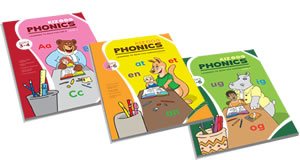
Want hard copies of our products? No problem. You may order our phonics activity books and more from our store - for Preschool & Kindergarten. Each set comes with CDs and the playing card sets and board game.
1st & 2nd Grade Books
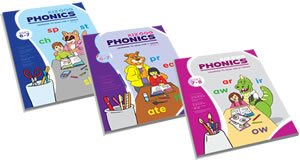
Want hard copies of our products? No problem. You may order our phonics activity books and more from our store - For 1st Grade & 2nd Grade. Each set comes with CDs and the playing card sets and board game.
Board Games & Playing Card Sets
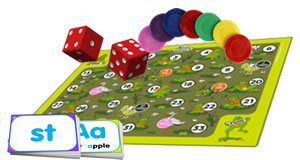
The teaching set is complete with board games and phonemic cards. we have grapheme cards, phoneme cards, alphabet cards which can all be used with the board game for fun phonics learning.
Introduction to Phonics Program
Welcome to your dedicated space for mastering Phonics Program. In early childhood education, establishing a strong foundation in phonics is the key to unlocking literacy. Whether you are a teacher planning a comprehensive curriculum or a parent helping your child read their first words, our resources are designed to make learning effective and enjoyable.
This guide focuses on best phonics program for kindergarten and associated phonemic concepts. We understand that learning to read is a journey that involves recognizing sounds, decoding words, and understanding meaning. Our materials—ranging from printable worksheets to interactive games—bridge the gap between theory and practice, ensuring students grasp the nuances of English pronunciation and spelling.
The Importance of Systematic Phonics Instruction
Why focus on Phonics Program? Systematic phonics instruction is proven to be the most effective way to teach children how to read. By explicitly teaching the relationship between letters and sounds, we empower students to decode new words independently.
Key Learning Outcomes
- Phonemic Awareness: Activities centered on hooked on phonics for preschoolers help children hear and manipulate individual sounds.
- Decoding Skills: Through consistent practice, students learn to blend sounds to form words, moving from simple CVC (Consonant-Vowel-Consonant) words to complex patterns.
- Reading Fluency: Repeated exposure to these patterns builds speed and accuracy, allowing students to focus on comprehension rather than just decoding.
How to Use These Resources effectively
Different learners respond to different methods. Here is how you can integrate our Phonics Program materials into your teaching strategy:
Printable Worksheets
Paper-based practice is crucial for handwriting and fine motor skills. Download our best phonics program for kindergarten worksheets for quiet time work. Encourage students to say the words aloud as they write them, reinforcing the connection between the hand, eye, and ear.
Frequently Asked Questions about Phonics Program
At what age should I introduce Phonics Program?
Every child is different, but these concepts are typically introduced in Pre-K to 1st Grade. Look for signs of readiness such as interest in letters and rhyming.
How can I help struggling readers with this?
Patience and repetition are key. Use our best phonics program for kindergarten visual aids and slow down the pace. Multisensory approaches—tracing letters in sand, using magnetic letters—can also help.
Explore Related Phonics Topics
Literacy is a building process. Once Phonics Program is mastered, consider exploring these related areas:
phonics curriculum.
Conclusion
Thank you for using KizPhonics as your partner in literacy education. We are dedicated to providing high-quality, research-based Phonics Program materials. Bookmark this page to easily access best phonics program for kindergarten resources whenever you need them. Happy teaching and happy reading!