The Alphabetic Principle
The alphabetic principle is the idea that letters and letter patterns represent spoken language. The alphabetic principle lays the foundation for reading words. Children need to identify, name, write letters and associate them with sounds at the very beginning of a literacy course. A good knowledge of letter names, shapes and sounds is a good predictor of success in learning to read. It is therefore important to teach letter-sound relationships explicitly and in isolation.
Materials for Teaching
Kiz Phonics ® provides one of the best materials for teaching the letter-sound relationships early on. The Kiz Phonics Preschool course is a good starting point for learning to read through phonics.
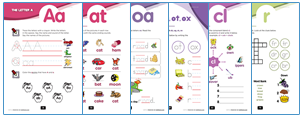
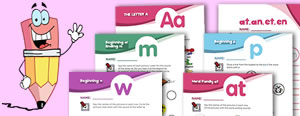
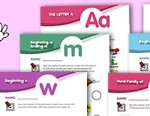
Worksheets : The Kiz Phonics Preschool worksheets are among the best in the industry for teaching children to recognize, trace and write letters of the alphabet at the preschool level.
Videos : Kiz Phonics also provides excellent short videos for presenting and teaching uppercase/lowercase letters and their initial sounds. They go hand-in-hand with the worksheets and make the task of teaching the letter names and sounds easy. The videos are song-based and provide a fun opportunity for learning the letters of the alphabet quickly. Do not hesitate to check out this brilliant version of the ABC song.
Fun Games & Activities: The Kiz Phonics course for preschool features online actitivities for naming, tracing and associating letters to sounds. Here is a great alphabet writing order activity to help learners practice. The course also features drag-n-drop games and digital flash cards, involving words with a letter and corresponding sound.
Apps for iPads/iPhones: If you own an iPad or iPhone, Kiz Phonics makes the learning of letter names and sounds even easier. Download the free Pre-K Phonics app and try..
For helping your child get up to speed with the alphabetic principle, Kiz Phonics offers a variety of resources, which careter to all learning styles. The course goes a step further by taking advantage of modern technology to deliver learning whenever and wherever possible.
Introduction to The Alphabetic Principle
Welcome to your dedicated space for mastering The Alphabetic Principle. In early childhood education, establishing a strong foundation in phonics is the key to unlocking literacy. Whether you are a teacher planning a comprehensive curriculum or a parent helping your child read their first words, our resources are designed to make learning effective and enjoyable.
This guide focuses on alphabetic principle vs alphabetic knowledge and associated phonemic concepts. We understand that learning to read is a journey that involves recognizing sounds, decoding words, and understanding meaning. Our materials—ranging from printable worksheets to interactive games—bridge the gap between theory and practice, ensuring students grasp the nuances of English pronunciation and spelling.
The Importance of Systematic Phonics Instruction
Why focus on The Alphabetic Principle? Systematic phonics instruction is proven to be the most effective way to teach children how to read. By explicitly teaching the relationship between letters and sounds, we empower students to decode new words independently.
Key Learning Outcomes
- Phonemic Awareness: Activities centered on alphabetic knowledge vs alphabetic principle help children hear and manipulate individual sounds.
- Decoding Skills: Through consistent practice, students learn to blend sounds to form words, moving from simple CVC (Consonant-Vowel-Consonant) words to complex patterns.
- Reading Fluency: Repeated exposure to these patterns builds speed and accuracy, allowing students to focus on comprehension rather than just decoding.
Core Concepts and Vocabulary
To successfully teach or learn The Alphabetic Principle, familiarity with specific terms is helpful. Here are the key concepts covered in this section:
- Alphabetic Knowledge Vs Alphabetic Principle: specific practice materials designed to reinforce this phonics rule.
- Alphabetic Knowledge Vs Principle: specific practice materials designed to reinforce this phonics rule.
- Alphabetic Principle Activities: specific practice materials designed to reinforce this phonics rule.
- Alphabetic Principle Vs Phonics: specific practice materials designed to reinforce this phonics rule.
- Alphabetic Principle Example: specific practice materials designed to reinforce this phonics rule.
How to Use These Resources effectively
Different learners respond to different methods. Here is how you can integrate our The Alphabetic Principle materials into your teaching strategy:
Printable Worksheets
Paper-based practice is crucial for handwriting and fine motor skills. Download our alphabetic principle vs alphabetic knowledge worksheets for quiet time work. Encourage students to say the words aloud as they write them, reinforcing the connection between the hand, eye, and ear.
Frequently Asked Questions about The Alphabetic Principle
What Is Alphabetic Principle?
This is a common question. When teaching The Alphabetic Principle, it's important to be consistent. Our specific resources for what is alphabetic principle provide clear examples and practice opportunities to clarify this concept.
Explore Related Phonics Topics
Literacy is a building process. Once The Alphabetic Principle is mastered, consider exploring these related areas:
define alphabetic principle, alphabetic principle, the alphabetic principle, alphabetic principles.
Conclusion
Thank you for using KizPhonics as your partner in literacy education. We are dedicated to providing high-quality, research-based The Alphabetic Principle materials. Bookmark this page to easily access alphabetic principle vs alphabetic knowledge resources whenever you need them. Happy teaching and happy reading!